
The Emotional Architecture of Mythology Romance
If you have ever picked up a mythology romance and finished it in one sitting wondering why it hit differently than anything else on your shelf, you are not imagining things. Mythology romance works because its emotional architecture is thousands of years old — and as USA Today Bestselling Author Victoria Pinder, I have spent years writing into that architecture, exploring what happens when ancient archetypes collide with modern desire, impossible stakes, and love that costs something real. The mythology romance genre is not a trend. It is a homecoming.
In this essay I want to take you behind the scenes of how I think about mythology in romance — what draws me to these stories, what makes them land so hard for readers, and which books in my own catalog grew directly out of mythological soil. If you love romance that feels weighty, layered, and emotionally enormous, you are already a mythology romance reader whether you knew it or not.

What Is Mythology Romance and Why Does It Work?
Mythology romance is any romance that draws from myth, legend, or ancient story — Greek, Roman, Norse, Celtic, Egyptian, or beyond — as a structural or thematic foundation. This does not necessarily mean gods walking the earth (though that is a valid and delicious subgenre). It means the emotional DNA of the story comes from something older than the printing press.
Think about what mythology actually is at its core: impossible tasks. Duty that conflicts with desire. A hero forced to choose between the life they were born into and the person they cannot live without. A woman standing at the crossroads of sacrifice and self. These are not plot devices invented in the twentieth century. These are the original romantic stakes. Homer was writing about them. Sophocles was writing about them. The reason they still land today is because they were never really about ancient Greece — they were always about us.
When I started writing Romancing Theseus, I was not interested in a straight retelling. I was interested in the pressure. Theseus is a man with a destiny so enormous it practically has its own gravitational field. What does it feel like to love someone who was shaped by fate before you ever met them? What does it cost the person who chooses to stand beside them anyway? That emotional question — not the labyrinth, not the Minotaur — is the engine of the book. The myth is the fuel. The romance is where the fire actually burns.
You can explore my full romance book series catalog to see how mythology weaves through multiple corners of my work.
The Emotional Architecture of Mythology Romance
Here is what I have learned after writing over 100 novels: readers do not fall in love with plot. They fall in love with stakes. And mythology gives you the highest possible stakes without having to manufacture them artificially, because the source material has already been pressure-tested by centuries of human beings who needed those stories to make sense of their own lives.
There are five emotional pillars that mythology romance almost always contains, and I think understanding them explains why the genre hooks readers so immediately:
1. Destiny Versus Choice
Every great myth is built on this tension. The hero was born for something. Fate has a plan. And then love walks in and suddenly the plan becomes unbearable. The romance becomes the story of whether the hero will follow the map they were given or tear it up for the person standing in front of them. That conflict is electric because we all know what it feels like to have obligations that war with what our hearts want.
2. The Impossible Task
Mythology is obsessed with tasks that should not be survivable. Twelve labors. A journey to the underworld. Twelve years of wandering. Romance borrows this structure brilliantly — the emotional impossible task. She has to marry someone else. He has sworn an oath that excludes love. They are from worlds that cannot coexist. The mythology romance does not invent new obstacles. It reaches back to the original ones.
3. Transformation Through Love
In myth, the hero comes back changed. That is the whole point of the journey. Mythology romance takes that transformation and makes it mutual — both people are changed by what they go through together. The HEA at the end of a mythology romance feels earned in a way that few other subgenres can match, because you have watched two people survive something mythic to get there.
4. Duty to Others Versus Loyalty to the Heart
Antigone is one of the most enduring mythological figures precisely because she is caught between two forms of loyalty that cannot both be honored. Her story is not just a tragedy — it is the original forbidden romance template. When I wrote Romancing Antigone, I was asking: what if she could have both? What if the choice did not have to destroy her? That reframing — taking a mythological figure and imagining a road to love they were denied — is one of the most generative things you can do as a romance writer.
5. Legacy and the Weight of a Name
Mythological heroes carry names that mean something before they do anything. They are born into expectation. This maps perfectly onto romance tropes like the heir who does not want the throne, the billionaire who resents the dynasty, the warrior who wanted a quiet life. The mythology romance makes explicit what other subgenres keep implicit: you are fighting against the story someone else wrote for you.
How Mythology Shows Up in My Own Books
I want to be honest with you about something: when I first started writing Romancing Theseus, I was going through a season where everything felt like it had a cost I had not agreed to pay. I was deep into a writing schedule that left very little room for anything else, and I kept coming back to this idea of the person who is destined for something great but has never been asked whether they wanted it. That felt true to me in a very specific way at that moment in my life.
Theseus in my version is not a god. He is a man who inherited an impossible legacy — one that demands everything of him before he has even had a chance to figure out who he is apart from it. His heroine walks into that world and refuses to be intimidated by it, and that refusal is what changes him. I wrote that dynamic because I needed to believe it was possible: that love could coexist with enormous inherited obligation without one destroying the other.
Romancing Antigone came from a different place. Antigone’s story in the original myth is one of the most heartbreaking in all of Western literature because she is right and she still loses. I could not let that stand. I wanted to write the version where her courage was rewarded — where standing up for what she believed, even against impossible odds, opened a door to love rather than closing every door there was. Her romance is earned through that exact act of courage. She does not become softer to be loved. She is loved because of the ferocity she was already carrying.
Both books are available on Apple Books, Amazon, Barnes and Noble, Kobo, Google Play, and more. You can find all the retailer links at victoriapinder.com/project/romancing-theseus/ and victoriapinder.com/project/romancingantigone/.
If you love mythology romance and have not yet explored my royal romance series — particularly the Princes of Avce — I think you will find the same emotional DNA running through them. A fictional kingdom, displaced royals, characters who are defined by legacy and destiny and who fall in love anyway. Mythology does not require Zeus. It requires stakes that feel ancient.
Why Mythology Romance Is Having a Moment in 2026
Readers right now are hungry for romance that has weight to it. I have been watching the conversation on BookTok and in reader communities, and the question I see come up again and again is some version of: where are the romance books that actually make you FEEL something enormous? Not just warm and swoony — though I love warm and swoony — but genuinely shaken. Books where the stakes are high enough that you cannot skim.
Mythology romance answers that question structurally. You cannot skim a book where one of the people falling in love was literally born to fulfill a prophecy or carry a name that means doom. The genre forces emotional depth because the source material demands it.
There is also something happening in the broader culture right now that I think is feeding this appetite. People are searching for stories that connect to something older than the news cycle — stories that remind them that human beings have always faced impossible choices, and love has always been the thing worth fighting for anyway. Mythology romance does that better than almost any other subgenre I can think of.
The comparison to forbidden romance is worth making here too, because mythology romance and forbidden romance share a deep structural similarity: both genres are built on the premise that loving this particular person requires paying a price. The difference is that mythology romance raises the price to civilizational stakes. You are not just crossing a family feud or a social barrier. You are potentially rewriting destiny.
Hidden Alphas: Where Mythology Lives in Action Romance
I want to take a slight turn here because I think there is a version of mythological storytelling that does not get discussed enough in romance circles, and that is the mythology of the warrior archetype — the hero who has been forged by something almost inhuman and must find his way back to his own heart.
The Hidden Alphas series is not mythology romance in the classical sense — there are no gods, no ancient Greece. But the emotional architecture is deeply mythological. Michael had his identity stolen from him — Dante Delligatti became someone else’s fiction, a name erased like it was never real — and his journey to reclaim it, from a remote island off the coast of Maine with Sophie at his side, is a hero’s quest in every meaningful sense of that phrase. Gabriel is haunted by things he cannot name, isolated in a castle, and Erica walks in during a blizzard and refuses to be kept at a safe distance. Rocco was a Marine who was falsely imprisoned — his entire story is about the injustice of being made into a villain by people with power, and the love that survives that crucible.
These are mythological emotional stakes dressed in contemporary clothes. The warrior unjustly punished. The hero with a stolen name. The man in the haunted place waiting for the one person brave enough to stay. If you love mythology romance for its emotional weight, you will find that same weight in the Hidden Alphas series.
Hidden Gabriel is completely FREE right now on Apple Books, Amazon, Barnes and Noble, Kobo, Google Play, and every major retailer. You can grab it at victoriapinder.com/project/hidden-gabriel/ and it costs you nothing to find out whether forced proximity in a haunted castle during a Maine blizzard is your particular flavor of paradise. (It is mine. I wrote it. I am biased. But I am also right.)
A Mythology Romance Reading Table: Tropes, Stakes, and Where to Start
Here is a breakdown of how different mythology romance angles map to emotional experience, so you can find your entry point based on what you are in the mood for:
| Mythology Angle | Core Emotional Stakes | Best For Readers Who Love | Victoria Pinder Starting Point |
|---|---|---|---|
| Hero with Destiny | Choice vs. fate, legacy burden | Billionaire heirs, royal romance | Romancing Theseus |
| Woman of Impossible Courage | Duty vs. desire, sacrifice rewarded | Forbidden romance, strong heroines | Romancing Antigone |
| Warrior Redeemed by Love | Identity stolen, found through love | Military romance, action adventure | Hidden Gabriel (FREE) |
| Displaced Royal / Stolen Throne | Rightful heir, conspiracy, justice | Enemies to lovers, royal intrigue | Irresistibly Lost (FREE prequel) |
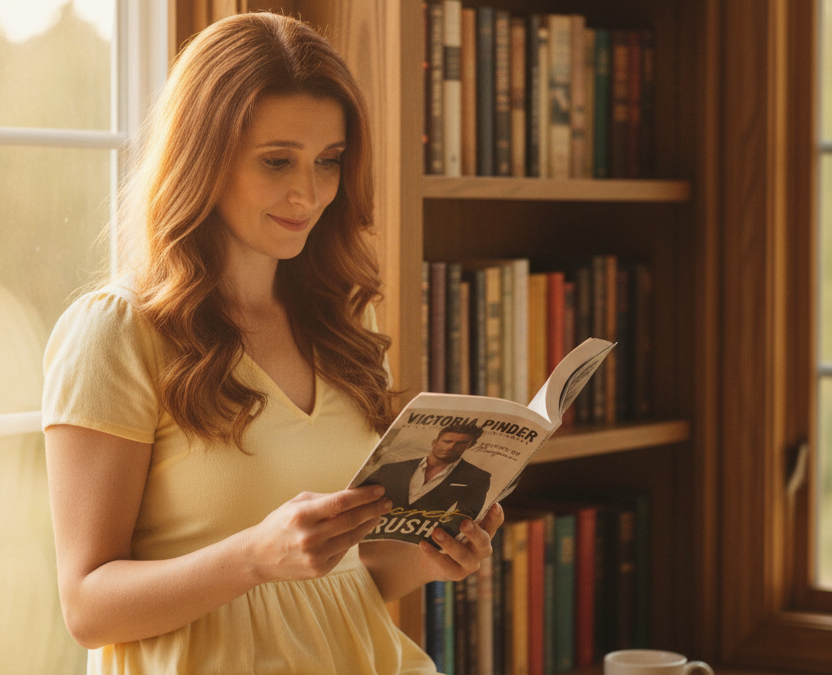
| Dynasty Built on Darkness | Children refusing to become their father | Billionaire saga, found family | Secret Crush (FREE, House of Morgan Book 1) |
Every one of these starting points is free or nearly free. There is no reason not to find yours today.
Quick Answer: Mythology romance works because it imports thousands of years of emotional stakes — destiny vs. choice, impossible tasks, transformation through love — directly into the romance structure. The result is a story that feels both ancient and urgently personal. Victoria Pinder’s mythology-influenced books include Romancing Theseus, Romancing Antigone, and emotionally mythological series like Hidden Alphas and the Irresistibly Brothers in Revenge saga.
What I Want You to Take Away About Mythology Romance
Here is what I keep coming back to after all these years of writing and reading: the reason mythology romance endures is not because readers want ancient history. It is because readers want to believe that love is worth the most impossible price. That a person can be born into a destiny that seems to exclude happiness and still find their way to it. That the woman who stands up against something enormous does not have to lose everything to be right.
Those beliefs are not naive. They are ancient. They are the reason human beings have been telling versions of these stories for as long as we have had fire to sit around.
When you pick up a mythology romance and feel that first electric pull of the impossible situation, you are not just reading a book. You are participating in something that has been happening for thousands of years — the act of imagining what it would look like if love won anyway.
I hope you will let me tell you some of those stories. Start anywhere in my catalog that calls to you. Every entry point is real, every character has a history, and every HEA was earned the hard way. That is the only kind I know how to write.
Start Reading: Mythology Romance by Victoria Pinder
Ready to dive in? Here are your starting points, all available on every major retailer:
- Romancing Theseus — Available on Apple Books, Amazon, Barnes and Noble, Kobo, Google Play, and more
- Romancing Antigone — Available on Apple Books, Amazon, Barnes and Noble, Kobo, Google Play, and more
- Hidden Gabriel (FREE) — Available on Apple Books, Amazon, Barnes and Noble, Kobo, Google Play, and more
- Irresistibly Lost (FREE prequel) — Available on Apple Books, Amazon, Barnes and Noble, Kobo, Google Play, and more
- Secret Crush (FREE, House of Morgan Book 1) — Available on Apple Books, Amazon, Barnes and Noble, Kobo, Google Play, and more
DM me the word BOOKS and I will send you my complete reading list so you can find exactly where you want to start.
Frequently Asked Questions
What is mythology romance as a book genre?
Mythology romance is a subgenre of romance fiction that draws its emotional structure, characters, or themes from ancient myths and legends — Greek, Roman, Norse, Celtic, and beyond. It does not require literal gods; it requires the emotional DNA of myth: impossible stakes, destiny versus desire, transformation through love, and heroes who must choose between their inherited legacy and the person they love. The result is romance that feels ancient and urgently personal at the same time.
What makes mythology romance different from fantasy romance?
Fantasy romance often builds an entirely new world with new rules, magic systems, and invented history. Mythology romance borrows from a shared cultural inheritance — stories and archetypes that readers already carry an emotional resonance for, even unconsciously. When you read about a hero with an impossible destiny or a woman forced to choose between duty and love, you are responding to something that has been culturally reinforced for thousands of years. Fantasy romance invents the stakes; mythology romance inherits them.
Who is Victoria Pinder and what mythology romance books has she written?
Victoria Pinder is a USA Today Bestselling Author with over 100 novels published across multiple series. Her mythology-influenced romance books include Romancing Theseus and Romancing Antigone, which take mythological archetypes and reimagine them as full emotional romance journeys with HEAs. Her Hidden Alphas series and Irresistibly Brothers in Revenge saga also carry deeply mythological emotional architecture — warriors with stolen identities, displaced royals fighting for justice, heroes shaped by forces larger than themselves.
Where should I start with Victoria Pinder mythology romance books?
If you want the most direct mythology romance experience, start with Romancing Theseus or Romancing Antigone — both are available on Apple Books, Amazon, Barnes and Noble, Kobo, and Google Play at victoriapinder.com. If you prefer action-adventure romance with mythological emotional weight, Hidden Gabriel is completely free on all retailers right now and is a perfect entry point into the Hidden Alphas series. DM Victoria the word BOOKS for a personalized reading order.
Why is mythology romance so popular with romance readers in 2026?
Readers in 2026 are seeking romance with genuine emotional weight — stories where the stakes feel real and the HEA is truly earned. Mythology romance delivers this structurally, because its source material has been pressure-tested by centuries of human storytelling. The tropes — impossible tasks, destiny versus choice, transformation through love, legacy and sacrifice — are not new inventions. They are the original romantic stakes, which is why they continue to resonate across every generation of readers.
Is mythology romance always set in ancient times?
No — and this is one of the most exciting things about the genre. Mythology romance can be contemporary, historical, or set in fictional worlds. What defines it is not the time period but the emotional architecture borrowed from myth. A contemporary billionaire saga can carry the emotional DNA of mythology if its hero is fighting against a destiny he did not choose and falling for the one person who sees him as a man rather than a legacy. Victoria Pinder’s books demonstrate this range across multiple series.
What tropes appear most often in mythology romance novels?
The most common tropes in mythology romance include: the hero with an impossible destiny, the forbidden love that crosses divine or social law, the woman whose courage changes the fate of those around her, the impossible task that tests the relationship, transformation through love and loss, and the stolen identity or rightful legacy reclaimed through the relationship. These tropes map directly onto popular romance structures like forbidden romance, enemies to lovers, second chance, and the protector hero — which is why mythology romance readers often love those tropes too.
Related Reading on This Site
Explore more romance that carries this kind of emotional weight: the forbidden romance collection, the royal romance series, and the full romance book series catalog at victoriapinder.com.
