
He Disappeared After a Perfect Night. Here’s Why.
He disappeared after their perfect night — and if you have ever read a romance where that happened and felt your heart drop into your stomach, you already understand exactly why this storytelling moment is one of the most powerful in the genre. When it is done right, that disappearance is the entire emotional engine of the story. It tells you everything about who the hero is, what he is afraid of, and how far he has to travel to become someone worthy of the ending he is about to earn. In the Steel Series, that moment is not a plot device. It is the truth of every man in these books.
I am going to break down exactly why heroes vanish after the best moment of their lives, what it means for the romance arc, and which Steel Series books deliver this emotional payoff at the highest level. I went even deeper on this in this week’s YouTube video — watch it if you want to understand the emotional architecture of why heroes vanish.

Why Did He Disappear After Their Perfect Night?
Here is the honest answer, and I want you to sit with it for a second: he disappeared because that night broke something open in him that he has spent years keeping sealed shut. The hero who runs after the best night of his life is not a man without feelings. He is a man who has built his entire identity around not having them — or at least not showing them. And then one night, one woman, one moment of real connection, and all of that infrastructure collapses.
For the Steel heroes specifically, this pattern runs through all eleven books. These are men in worlds that reward performance. Pro athletes. Ruthless financiers. Power players. The armor they wear is functional — it has protected them from something real. A father who was never proud of them. A world that only valued their output. A past relationship that taught them love is conditional. So when a woman gets through every layer of that armor in one night, the first thing they feel is terror.
Running is, in that moment, the most emotionally honest thing they can do. They cannot fake it back to normal. They cannot pretend the night did not matter. So they disappear. And that disappearance becomes the wound the entire rest of the book is built around healing.
The Difference Between Avoidance and Cowardice
This is something I think about a lot as a writer. There is a version of this trope that reads as the hero being simply awful. He ghosts her, she suffers, and we are supposed to cheer when he comes crawling back. That version does not work for me and it does not work for readers who want emotional depth. The version that works — the version I write in the Steel Series — is where his avoidance is understood. You see inside his head. You understand what that night cost him. And you watch him struggle with himself before he ever shows up at her door again.
The distinction matters because it changes what the reunion means. If he left because he is careless, the reunion is relief. If he left because the feeling was too big and he had no tools to hold it — the reunion is earned. It feels different in your chest. That is the goal.
What His Disappearance Reveals About Him
Every time a Steel hero runs, it is a character revelation. Not a character flaw that gets excused — a window into exactly what kind of healing this man needs before he can be the partner she deserves. In Rocking Player, the fake marriage setup means both of them are technically in a transactional arrangement — which makes the night they stop pretending all the more devastating. He did not sign up for real feelings. Neither did she. And when real feelings arrive anyway, his instinct is to retreat to the terms of the contract. Because contracts he understands. Love he does not.
That retreat — that desperate scramble back to the safety of defined terms — is not him being a bad person. It is him showing you exactly where his wound is. And as a reader, once you see it, you cannot unsee it. You spend the rest of the book watching him inch toward the thing he is most afraid of. And when he finally lets himself have it, you feel it in your bones.
The Steel Series: Where This Trope Lives at Its Best
If you have been searching for a billionaire romance series with real emotional stakes, the Steel Series is what you have been looking for. Eleven books. Secret babies with pro athletes. Fake marriages with ruthless power players. Second chances with men who finally understand what staying actually costs them. The tagline I have always used for this series is: a Steel love is forged to last. That is not marketing language. That is what these books are about — love that goes through fire and comes out stronger on the other side.
Here is something I want to be honest about: I wrote these heroes at a time when I was thinking a lot about what it means to be strong. Not just physically strong — emotionally strong. And I kept landing on the same uncomfortable truth. Real emotional strength is not the absence of fear. It is feeling the fear and staying anyway. Every Steel hero has to learn that lesson in his own specific way. And the reader gets to watch every painful, beautiful step of that education.
Where to Start in the Steel Series
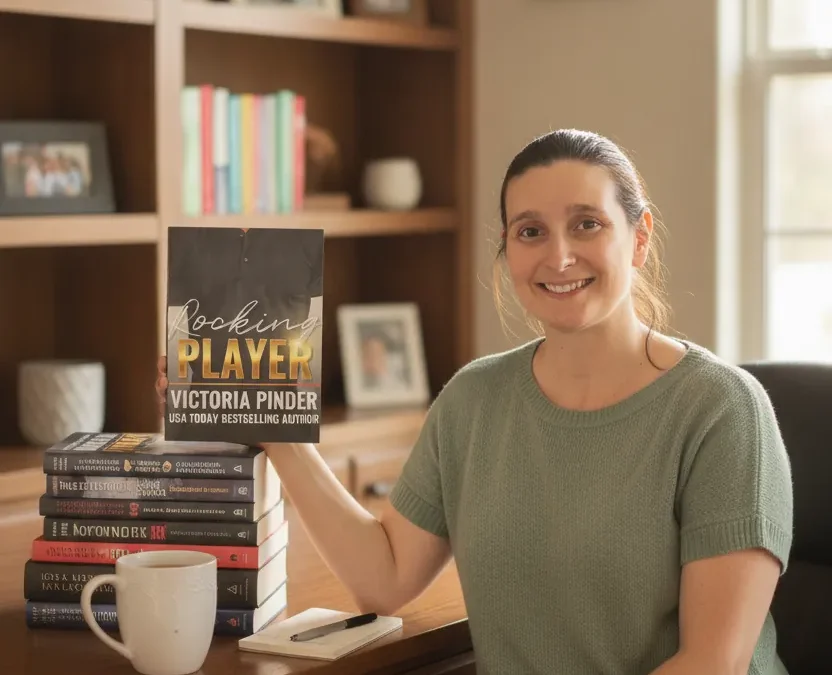
Start with Rocking Player — it is completely free on Apple Books, Amazon, Barnes and Noble, Kobo, Google Play, and every major retailer. It sets up the emotional DNA of the entire series. The fake marriage. The night that changes everything. The morning after when he does not know what to do with what he is feeling. By the time you finish book one, you will understand why readers go straight to book two without taking a breath.
From there, the series expands — each book its own complete love story with its own hero, heroine, and wound to heal.
I went even deeper on this topic in this week’s new YouTube video — if you want to hear me talk through the emotional architecture of why heroes vanish and how the Steel Series handles the aftermath, watch the full take on YouTube. It is the kind of conversation I love having with readers who want to understand not just what happened in a book, but why it hit so hard.
Why Does He Come Back? The Emotional Logic of the Return
This is the part I love writing most. He does not come back because she waited. She is not waiting. She is building. She is becoming more herself in his absence than she ever was when he was in the room. That transformation — her refusal to collapse, her decision to keep moving, her growth into the fullest version of who she is — is what eventually becomes undeniable to him.
He comes back because he cannot pretend the night did not happen. He comes back because he has tried every other option and none of them work. He comes back because he finally understands that running was never going to make him feel less. It was just going to make him feel less while also being alone. And a man who has been alone long enough — really alone, in the way these heroes are alone even when surrounded by people — eventually realizes that the thing he ran from is the only thing that felt like home.
The Reunion Scene: Why It Has to Cost Him Something
In every Steel book I have written, the reunion scene has to cost the hero something real. Not just an apology. Not just showing up. He has to put something on the table that he has never put on the table before — his pride, his control, his carefully constructed identity as a man who does not need anyone. When he walks back into her life, he has to walk in as someone who has done the internal work. Because she has done her work. She has grown. If he has not grown to match her, the reunion does not feel earned. It feels like she is settling. And these heroines do not settle.
That cost is what makes Steel reunions feel different from other billionaire romance returns. It is not grand gestures — though sometimes there are grand gestures, and honestly I love writing them. It is the quiet moment underneath the gesture. The moment where he says, with his whole body and history, I see you. I am scared. I am staying anyway.
Steel Series Trope Stack: What Makes This Series Different
If you are a trope-driven reader — and honestly most of us are, whether we admit it or not — here is what the Steel Series delivers across its eleven books:
- Fake marriage that becomes real: The contractual start that gives both characters permission to be close before they are brave enough to choose closeness.
- Secret baby: A consequence that forces confrontation with a past that was never truly resolved. In the Steel world, secret babies are never just plot — they are the moment a character has to decide who they actually are.
- Sports romance: Pro athletes who understand performance and have to learn that love is not a performance. The stadium roar cannot drown out the silence in a hotel room at two in the morning.
- Billionaire power dynamics: Men who have everything except the one thing they cannot buy. Women who are not impressed by the money and are absolutely not interested in being managed.
- Second chance: Not just romantic second chances — second chances at being the person you meant to be before the world taught you to be someone else.
This trope stack is why the Steel Series keeps showing up in reader conversations about the best interconnected standalone romance series. Each book stands alone — you get a complete HEA, one couple, one fully resolved story. But the world they live in is rich and layered and connected, which means every book you read adds texture to every other book you have already read.
How the Perfect Night Trope Connects Across Romance Series
The disappearing hero after a perfect night is not unique to the Steel Series — it shows up across romance in different forms. In the Brothers in Revenge series, Jake’s emotional unavailability comes from a different wound — a stolen throne, a murdered father, a mission that has consumed his entire identity. His version of disappearing is staying physically present while making himself emotionally unreachable. Which is, honestly, even harder to watch because she is right there and she can see him choosing to stay locked up inside himself.
In the House of Morgan, Peter’s version of this pattern plays out across twenty books — which tells you something about how deep the wound is and how complicated the healing has to be when the source of the wound is the man who was supposed to teach you what love looks like.
The Steel Series version is compressed, intense, and emotionally satisfying in the way that a perfectly structured standalone can be. You get the full arc in one book. The wound, the night, the disappearance, the growth, the return, the cost, and the earned HEA. Every time.
A Personal Note on Writing These Heroes
I wrote the first Steel book during a period when I was thinking a lot about men I had known — real men, not fictional ones — who had run from exactly the kind of connection they said they wanted. And I kept asking myself: what would it take for a man like that to come back? Not what would it take to make him stay in the first place. What would it take for him, after the running, to turn around and walk back toward the thing that terrified him?
The answer I kept landing on was this: he would have to believe, truly believe, that the woman on the other side of that door was not going to punish him for leaving. She was going to be honest about how it hurt. But she was not going to use it as a weapon forever. She was going to let him prove, with actions over time, that the man standing at her door was not the same man who walked away from her six months ago.
That grace — not weakness, not doormat energy, but earned grace extended to someone who has done real work — is what I try to write in every Steel heroine. She is not soft because she is easy. She is soft in exactly the right places because she is strong enough to choose softness on purpose.
Start Reading the Steel Series Today
If this is the kind of romance you have been looking for — emotionally real, trope-rich, with heroes who disappear and then come back having done actual work — the Steel Series is waiting for you. All eleven books are available on Apple Books, Amazon, Barnes and Noble, Kobo, Google Play, and every major retailer. Rocking Player is free. Start there. You will not need any other recommendation after chapter two.
And if you want to go even deeper on the emotional architecture of why heroes vanish and what it means for the romance arc, the new YouTube video covers it in a way the blog cannot fully hold. Watch it. Then come find me and tell me which Steel hero resonated most with you — because I guarantee you will have an opinion by the time you finish book one.
Comment STEEL on any of my social posts and I will drop the full reading order right to you. Or head directly to victoriapinder.com and start building your Steel Series reading list today.
Frequently Asked Questions
Why do romance heroes disappear after a perfect night?
In romance fiction, a hero who vanishes after an emotionally intense night is typically signaling that the connection broke through defenses he spent years building. The disappearance is not indifference — it is terror. Men who have learned to define themselves through control, performance, or emotional distance often flee the first moment something genuinely pierces that armor. The disappearance becomes the wound the rest of the book is built around healing.
What is the Steel Series by Victoria Pinder about?
The Steel Series is an eleven-book contemporary billionaire romance series featuring secret babies with pro athletes, fake marriages with ruthless power players, and second-chance romances where the heroes must earn their happy ending. Each book is a standalone with a complete HEA for one couple, but the world is interconnected so every book adds depth to the others. Rocking Player, book one, is permanently free on all major retailers.
Where should I start with the Steel Series?
Start with Rocking Player — it is free on Apple Books, Amazon, Barnes and Noble, Kobo, Google Play, and everywhere books are sold. It establishes the emotional DNA of the entire series: a fake marriage that becomes real, a hero who runs after the night everything changes, and a heroine who refuses to wait around for him to figure himself out. It hooks most readers by chapter two.
Is the Steel Series standalone or does it need to be read in order?
Every Steel Series book is a complete standalone romance with a full happily ever after for one couple. You can read them in any order and be completely satisfied. Reading in order adds richness because secondary characters reappear as main characters in later books and choices made early in the series ripple forward — but it is never required. Each book works entirely on its own.
What tropes does the Steel Series include?
The Steel Series includes fake marriage, secret baby, sports romance, billionaire romance, second chance romance, and forced proximity across its eleven books. Each book emphasizes a different trope combination, which keeps the series fresh while maintaining consistent emotional intensity. The unifying thread is heroes who are powerful in every external way and emotionally underdeveloped in every internal way — and the women who refuse to accept that as their permanent reality.
Why do Steel Series heroines not wait for the hero to come back?
The heroines in the Steel Series grow and build in the hero’s absence rather than waiting for him to return. This is a deliberate authorial choice — their transformation in the time he is gone is what eventually becomes undeniable to him. She does not draw him back by pining; she draws him back by becoming more fully herself. The reunion only works emotionally because both characters have done internal work before they face each other again.
How does the disappearing hero trope appear in other Victoria Pinder series?
The emotional unavailability pattern appears across multiple series but in different forms. In the Brothers in Revenge series, Jake stays physically present while making himself emotionally unreachable — a subtler and in some ways more painful version. In the House of Morgan, Peter’s version plays out across twenty books because his wound runs that deep. The Steel Series delivers the full arc — wound, flight, growth, return, earned HEA — in a single standalone book each time.
