
Why I Write Mythology Romance: A Deep Dive Into the Stories Behind the Stories
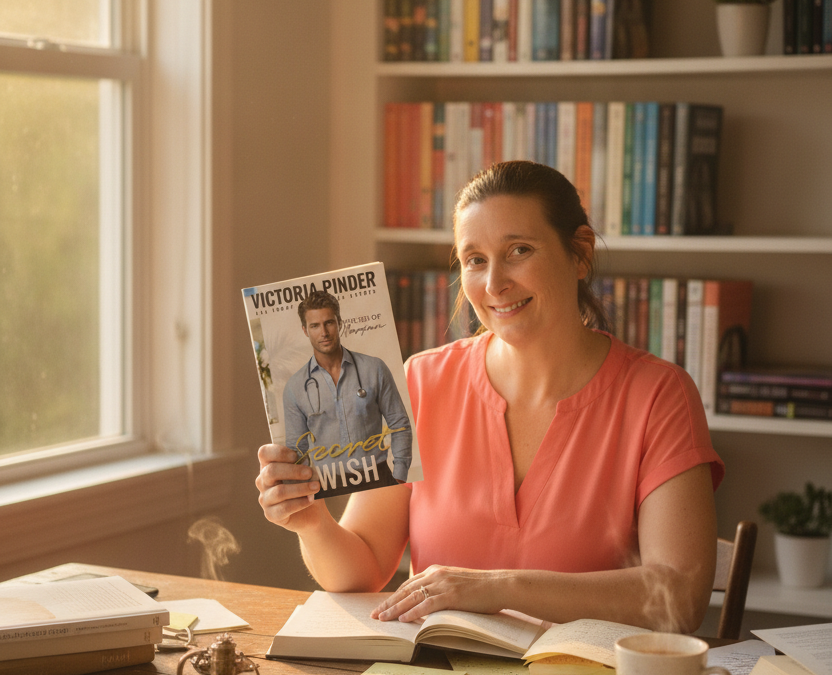
If you have ever searched for mythology romance by Victoria Pinder and landed here wondering where the ancient gods meet the billionaire royals, you are in exactly the right place. I am Victoria Pinder, USA Today Bestselling Author, and I want to tell you something I do not talk about nearly enough: mythology is not just an influence on my writing. It is the skeleton underneath almost everything I have ever published. The hunger for it, the weight of it, the way myth makes every love story feel like it was always meant to happen — that is the engine driving books like my Princes of Avce series and so much more. Let me take you behind the curtain today, because the real story of why I write mythology romance is woven into some of the most personal chapters of my life as an author.

What Is Mythology Romance and Why Does It Matter?
Mythology romance is exactly what it sounds like — love stories that draw their structure, their characters, their emotional stakes, or their world-building directly from ancient myth. But here is the thing that took me years to fully articulate: it is not just about gods and goddesses appearing on the page. It is about using the archetypal weight of myth to make modern love feel inevitable. Fated. Earned across centuries.
When I talk about mythology romance, I mean stories where the reader feels something ancient in the emotional pull between two people. The hero who is exiled and must prove himself. The heroine who carries a power she cannot yet name. The kingdom at stake. The price of love measured in sacrifice rather than convenience. These are mythic patterns. They are as old as Homer and as fresh as the romance novel you downloaded this morning.
Ancient myth gave us the template for almost every romance trope we love today. Forbidden love? Orpheus and Eurydice. Enemies to lovers? Ares and Aphrodite. Marriage of convenience with a king? Every queen in Greek tragedy who was wed to power before she was ever asked what she wanted. The difference is that in my romance series, the women get to choose differently. That is the whole point.
How Mythology First Crept Into My Writing Life
I want to tell you honestly about where this started for me, because it was not some grand academic decision. I was not sitting in a university library making notes about Ovid. I was a reader first, long before I was a writer, and mythology romance snuck into my bloodstream through the books that wrecked me before I ever sat down to write my own.
I grew up reading stories where love had consequence. Where the people who fell for each other had to give something up, fight something impossible, or survive something that should have broken them. That felt true to me in a way that lighter stories sometimes did not. Myth taught me that love is not decorative — it is load-bearing. It holds the whole structure of a story up.
When I started writing seriously, I found myself naturally gravitating toward characters who carried that mythic weight. The man who has everything and has lost the one thing that matters. The woman who was told she was powerless and turns out to be the reason the whole world pivots. I was not consciously writing mythology — I was writing the emotional architecture that mythology handed me, and dressing it in contemporary clothes.
The Princes of Avce: My Most Mythic Series
If you want to see mythology romance fully expressed in my work, the place to start is the Princes of Avce series. Twelve books. Twelve royals. One fictional kingdom named Avce that I built with the full weight of mythic dynasty behind it.
When I created the kingdom of Avce, I was thinking about the way ancient kingdoms worked in Greek and Roman mythology — not as backdrops, but as living forces. The kingdom has its own demands. Its own memory. Its own way of claiming the people born into it. The princes of Avce did not choose their crowns any more than Achilles chose his destiny. What they choose — what every book in the series is really about — is whether they will let that inherited power define every relationship they have, or whether they will fight for something more personal, more real, and infinitely more dangerous.
Take Rossie and Stefano in Forbidden Marquis. She arrives in Paris having fled the altar, carrying all the humiliation and grief of a love that publicly failed her. He is an Italian marchese whose connection to Avce makes him powerful in ways that go well beyond money. Their contract marriage is, on the surface, a political arrangement — but underneath it is a mythic negotiation about identity. Who are you when you strip away the role you were given? Who do you become when someone sees you without the costume?
I wrote that book thinking about Persephone. Not the kidnapping — I am not interested in that reading of the myth. I am interested in the version where she chooses. Where she looks at the underworld and says: this is not what I expected, but there is something here that is mine. Rossie does that. She walks into a life she did not plan and discovers that the unplanned life fits her better than the one she had rehearsed.
Mythology Romance Tropes: A Guide to What I Write and Why
I want to give you something useful here — a real map of the mythology romance tropes I use across my catalog, because if you love one of these, you will find the others feel like coming home.
| Mythic Pattern | Romance Trope It Becomes | Where I Use It |
|---|---|---|
| The exiled prince reclaiming his throne | Displaced royal / forced to fight back | Brothers in Revenge (Irresistibly series) |
| The god-king who needs a queen | Marriage of convenience / billionaire royal | Princes of Avce |
| The woman with hidden power | Heroine who saves the hero without knowing | House of Morgan (Jennifer Gonzales arc) |
| The cursed bloodline / dark inheritance | Refusing the father’s legacy | House of Morgan |
| Two enemies bound by fate | Enemies to lovers / forced proximity | Irresistibly Strong (Eva and Jake) |
| The warrior who cannot go home | Protector hero / second chance | Hidden Alphas |
| The laird bound to the land | Forced proximity / snowbound | Modern Scottish Lairds |
When you look at that table, you can see that mythology romance is not one narrow lane — it is a way of seeing any story through the lens of archetype. Every series I write has a mythic skeleton underneath it, even when there are no literal gods on the page.
The Books That Show My Mythology Romance Vision Fully
Let me get specific, because I know you are here for book recommendations and not just my philosophical musings about Persephone — though honestly, I could talk about her all day.
Forbidden Crown (Princes of Avce Book 1 — FREE)
This is where the Avce mythology romance world begins. A woman agrees to something that cannot possibly be personal. A royal who has no business falling for anyone. One kingdom that does not care about either of their plans. Forbidden Crown is permanently free on all retailers — get your copy on Apple Books, Amazon, Barnes and Noble, Kobo, Google Play, and more. If mythology romance with fake marriage and forced proximity is your exact weakness, start here tonight.
Forbidden Marquis (Princes of Avce)
Rossie and Stefano are the couple I described above — the altar escape, the Paris flight, the contract that was never supposed to feel like anything. Forbidden Marquis is available on all retailers. This is the book for you if you loved the emotional gut-punch of a heroine who had to rebuild her entire self-image before she could accept that she deserved the love she was standing in.
Romancing Theseus and Romancing Antigone
If you want my most literally myth-adjacent books, these are the ones. I took the actual names and the actual mythic weight and then asked: what happens when Theseus is a modern man who still carries the hero’s impossible burden? What does Antigone look like when the law she defies is not political but personal? Romancing Theseus and Romancing Antigone are both available on all retailers and they are the books I point to when someone says they want their mythology romance served straight, no chaser.
What Mythology Teaches Me About Writing Romance
I want to tell you something that I think is genuinely useful if you are a reader who keeps coming back to mythology romance and wondering why it hits different from other romance subgenres.
Myth works because it is not afraid of consequences. In Greek mythology, love costs something. It demands proof. It survives tests that are designed to break it. And when it survives those tests, the victory means something — because you watched the cost. Romance fiction at its best does exactly the same thing. The fake marriage only lands if there was a real moment where she almost walked away. The enemies to lovers only devastates if you believed, for at least three chapters, that they genuinely could not find their way to each other.
Mythology romance, as I write it, is about making the emotional stakes feel ancient and specific at the same time. The story is happening to these two people, right now, in a Miami penthouse or a French chateau or a fictional kingdom — and also it is happening to every person who has ever loved something they were not supposed to want. That doubling is what myth does. That is why I cannot stop writing it.
I also think mythology romance gives readers permission to want big love. Not convenient love. Not sensible love. The kind of love that reorganizes the world around itself. Myth has always been about the things we want so badly we would sacrifice our ordinary lives for them. Romance, at its core, is about the same hunger. Mythology romance just names it honestly.
How I Build Mythic Worlds Without Losing the Reader in the Map
One of the questions I get asked most often about the Princes of Avce series is: how do you create a fictional kingdom that feels real without overwhelming the reader with world-building? And honestly, the answer is mythology again.
When you root a fictional world in mythic logic — in the patterns of dynasty, exile, sacred duty, forbidden love — readers already know the emotional grammar of that world even if they have never heard of Avce. The kingdom does not need ten pages of history because the reader’s heart already knows what a kingdom demands. I just have to give it a name and a geography and a set of specific characters who are trying to escape it or save it or both at once.
The same principle applies across all my mythology romance work. I never try to out-research the mythologists. I try to out-feel them. What does it feel like to carry a bloodline that wants to consume you? What does it feel like to marry a man whose whole life is public property and discover that inside all that power there is someone who has never been fully known? Those are the questions I am always asking. Myth just gives me the biggest possible theater in which to ask them.
If you want to explore my full mythology romance catalog — from the Princes of Avce to the ancient-name books to the Hidden Alphas with their own warrior-exile mythic patterns — you can find everything organized by series at my complete series guide. And if you want to go straight to the royal mythology romance that started it all, my royal romance page has every Avce book in order.
A Personal Note on Why Mythology Romance Will Always Be My Home
I have published over 100 novels now. USA Today Bestselling Author is the credential on the cover, but the real credential — the one I earned in the quietest way — is that I have spent over a decade sitting with stories that felt bigger than me and trusting that the myths underneath them knew what they were doing.
Mythology romance is where I feel most like myself as a writer. It is where the stakes feel true. It is where a fake marriage can carry the weight of an oath, where a displaced prince can feel like every exile who ever looked back at something they lost, where a woman who was told she was powerless can turn out to be the reason the whole dynasty survived.
If you love mythology romance — if you feel that pull toward stories where love is not just personal but fated, where the emotional weight is ancient even when the setting is contemporary — I wrote over 100 books for you. And the best place to start is free.
Grab Forbidden Crown on all retailers. Let Avce have you. I promise you will not regret it.
Start Reading: Featured Mythology Romance Books
Forbidden Crown (Princes of Avce Book 1) — FREE on Apple Books, Amazon, Barnes and Noble, Kobo, Google Play, and more. Start the kingdom of Avce saga tonight.
Forbidden Marquis — Rossie, Stefano, Paris, and a contract that was never supposed to become a love story. Available on all retailers.
Romancing Theseus — The hero’s myth retold as a contemporary romance. Available on all retailers.
Romancing Antigone — Defiance, love, and the law she refuses to follow. Available on all retailers.
DM me the word AVCE on Instagram and I will send you the complete Princes of Avce reading order right to your inbox. And if you want new release alerts the moment the next mythology romance hits, sign up for my newsletter and get a free book immediately. I cannot wait to hear which royal breaks your heart first.
Frequently Asked Questions
What is mythology romance and how is it different from paranormal romance?
Mythology romance draws its emotional structure and character archetypes from ancient myth — Greek, Roman, Celtic, Norse — but the stories are typically contemporary or royal settings, not paranormal worlds. Unlike paranormal romance, there are usually no supernatural powers or magical systems. The ‘mythology’ lives in the archetypal weight of the story: the exiled prince, the forbidden love, the price of power. Victoria Pinder’s mythology romance books like Romancing Theseus use real mythic names while telling fully grounded contemporary love stories.
Where should I start with Victoria Pinder’s mythology romance books?
Start with Forbidden Crown, the first book in the Princes of Avce series — it is permanently free on all retailers including Apple Books, Amazon, Barnes and Noble, Kobo, and Google Play. If you want Victoria’s most literally myth-adjacent books, go directly to Romancing Theseus or Romancing Antigone. For mythology romance wrapped in an enemies-to-lovers spy thriller, the Irresistibly series (start with the free prequel Irresistibly Lost) carries strong mythic exile and stolen-throne patterns.
What mythology does Victoria Pinder draw from in the Princes of Avce series?
The Princes of Avce series draws primarily from Greek and European dynastic mythology — the patterns of sacred kingship, exile, forbidden marriage, and the tension between inherited duty and personal desire. The fictional kingdom of Avce is built on mythic logic rather than any single specific mythology, which means readers who love Greek myth, Arthurian legend, or medieval royal romance all feel at home in the series. Each of the twelve books features a different royal navigating these mythic pressures through a contemporary romance lens.
Are Victoria Pinder’s mythology romance books part of a series or can I read them as standalones?
Both options exist in her catalog. The Princes of Avce series (twelve books) and the Brothers in Revenge saga (seven books plus a prequel) are best read in order for full story satisfaction. Romancing Theseus and Romancing Antigone can be read as standalones. Victoria always recommends starting with a free first book — Forbidden Crown for Avce or Irresistibly Lost for the Brothers in Revenge saga — so you can fall in love with the world before committing to the full series.
What romance tropes does Victoria Pinder combine with mythology in her books?
Victoria’s mythology romance books combine mythic archetypes with popular contemporary romance tropes: marriage of convenience with royals (Princes of Avce), enemies to lovers with a stolen throne (Irresistibly series), forced proximity in ancient castle settings (Modern Scottish Lairds), secret heir and dark inheritance (House of Morgan), and protector hero with warrior exile patterns (Hidden Alphas). The mythology lives underneath the trope, giving the emotional stakes a fated, ancient weight that readers describe as the reason they finish entire series in a single weekend.
Does Victoria Pinder write mythology romance with Greek gods as characters?
Victoria’s primary mythology romance approach uses mythic patterns and archetypal character structures rather than literal Greek gods as characters. Romancing Theseus and Romancing Antigone use the actual mythic names and emotional blueprints in contemporary settings. Her Princes of Avce series builds a fictional royal kingdom on mythic dynastic logic. This approach lets readers feel the ancient weight of the story without requiring familiarity with classical mythology — the emotional grammar is universal.
Where can I find a complete list of Victoria Pinder’s mythology romance and royal romance books?
The complete guide to Victoria Pinder’s mythology and royal romance catalog lives at victoriapinder.com/royal-romance/ for the Princes of Avce series and victoriapinder.com/romance-book-series/ for her full series list across all tropes. Every book page shows buy buttons for all retailers: Amazon, Apple Books, Barnes and Noble, Kobo, Google Play, and more. Victoria is a wide author — her books are equally available everywhere you prefer to read.
