
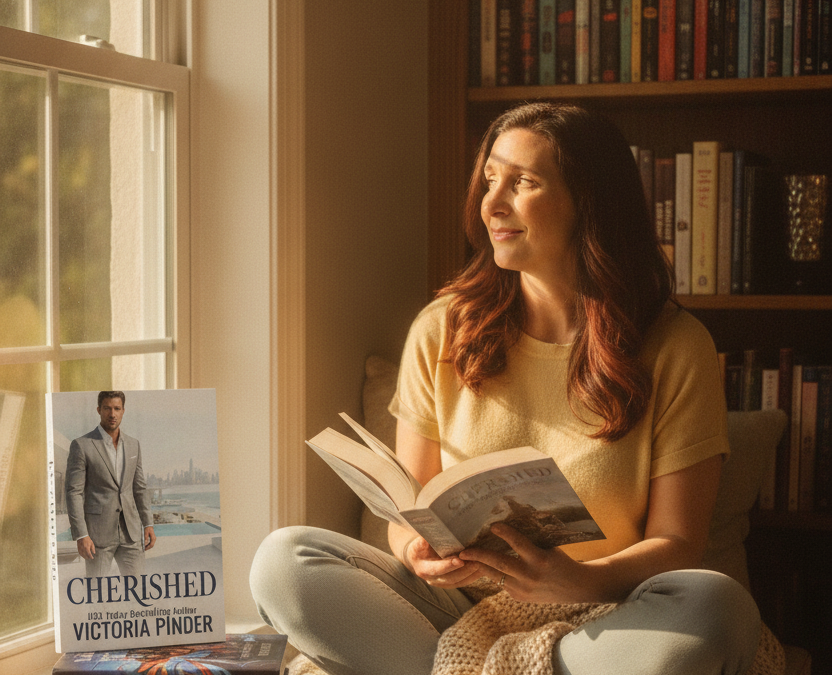
Why I Write Mythology Into My Romance
If you have ever picked up a mythology romance and felt that specific kind of ache — the one that says this love was fated before these two people ever had a choice — then you already understand what I am trying to do every time I write in this space. Victoria Pinder, USA Today Bestselling Author and writer of over 100 romance novels, has been weaving mythology into her contemporary romance since she first realized that the ancient stories and the modern love story are telling exactly the same thing in different costumes. The mythology romance genre is not a niche corner of romance — it is romance at its most elemental, stripped down to fate, legacy, impossible odds, and the terrifying choice to love someone anyway.
I want to take you inside how that actually works in my writing life, because the answer surprised even me when I sat down to figure it out.

What Mythology Romance Actually Means to Me
The phrase mythology romance covers a lot of ground. For some writers it means gods and goddesses in ancient settings. For others it means retellings where Persephone finally gets to tell her own story. For me, it has always meant something a little more personal than either of those things. It means taking the weight of myth — that cosmic, inevitable, written-in-the-stars quality — and dropping it into the chest of a completely modern person who has no idea they are carrying it.
I wrote Romancing Theseus because I could not stop thinking about what it means to be named after a legend. Theseus in the old myths is the hero who killed the Minotaur, the man who abandoned Ariadne on a beach, the king who made choices that cost everyone around him enormously. What does it do to a modern man to carry that name? Does he feel the weight of it? Does he push against it? Does he fall into the same patterns without realizing it? Those are the questions that romance lets me answer in the most intimate possible way — through a love story where all of that myth-weight gets tested against a real woman who refuses to be his Ariadne.
And then I wrote Romancing Antigone because the Antigone myth is one of the most heartbreaking stories ever told about a woman who chose principle over survival. I wanted to know what she would look like if she got a second chance. If the world she was born into had a different ending available. Mythology romance, at its best, is a conversation with the source material — you are not just retelling it, you are arguing with it, revising it, asking what these ancient characters would choose if love were actually on the table as a real option instead of a complication.
You can explore both of these books and more on my complete romance series page.
Why Ancient Myths Make the Best Romance Tropes
Here is the thing I figured out somewhere around book thirty of writing romance: every single trope we love in contemporary romance already exists in mythology. Every single one.
| Romance Trope | Mythology Parallel |
|---|---|
| Enemies to lovers | Eros and Psyche — he was sent to destroy her, fell in love instead |
| Forbidden romance | Persephone and Hades — a love the whole world tried to prevent |
| Forced proximity | Ariadne and Theseus — trapped together in a labyrinth situation with no exit |
| Second chance romance | Orpheus and Eurydice — the whole myth is literally a second chance |
| Marriage of convenience | Hera and Zeus — divine politics, not love, sealed that deal |
| Secret identity | Apollo in mortal form — nobody knows who they are really falling for |
This is why mythology romance works so powerfully. When you read a retelling or a myth-inspired contemporary, your subconscious is already loaded with the emotional stakes from the source material. You already know Eros and Psyche belong together. You already feel the unfairness of Persephone being kept from the sun. The myth has pre-loaded your heart and the romance writer gets to use that charge.
What I try to do in my mythology-inspired romance is honor that charge without becoming a prisoner to the original ending. Mythology tends to be tragic. Romance is fundamentally optimistic. The conversation between those two impulses is where the interesting writing lives.
The Night I Realized Mythology Was in Everything I Write
I have to tell you about the moment I understood this, because it happened in the most unexpected place. I was deep in the House of Morgan series — probably around book twelve or thirteen — and I was writing a scene where Peter Morgan has to decide whether to claim his father’s criminal legacy or destroy it. And I realized I was writing Oedipus. Not literally, obviously. But structurally. A son haunted by a father’s fate. A man who has been told since birth that he is destined to become a specific kind of monster. The whole question of whether destiny is real or whether we choose who we are.
The House of Morgan is full of this. Mitch Morgan — the father who built the empire, who died before page one, who is never in a single scene — functions exactly the way a god functions in mythology. He is the absent force that shapes everything. Every choice every Morgan child makes is either running toward him or running away from him. That is mythological architecture inside a contemporary Miami billionaire saga. I did not plan it consciously. It emerged because that is how deep human storytelling goes. Legacy, fate, the sins of the father — mythology is just the oldest language we have for those questions. Start with Secret Crush, the first House of Morgan book, which is completely free on all retailers, and watch how that mythological weight builds from the very first chapter.
What Makes Mythology Romance Different From Other Fantasy Romance?
I get asked this a lot, especially from readers who love fantasy romance and are wondering whether mythology romance will scratch the same itch. Here is my honest answer: mythology romance and fantasy romance overlap significantly, but they feel different in a specific way that matters to readers.
Fantasy romance builds a world from the ground up. The reader has to learn the rules, the magic system, the political landscape, the geography. The romance is the heart but the world is equally new territory. Mythology romance — especially contemporary mythology romance like mine — starts with a world you already inhabit and adds the weight of myth to it. Your protagonist is walking through Miami or London or a Maine island, doing recognizable modern things, but they are carrying a name or a bloodline or a curse that connects them to something ancient.
This means the emotional entry point is different. Fantasy romance readers often say they love getting lost in another world. Mythology romance readers often say they love feeling like the world they already live in has hidden depth. That the coffee shop and the office building and the family dinner are happening on top of an older, more resonant story that has always been there.
For me as a writer, contemporary mythology romance is the most exciting space because I get to honor the source material while making it completely accessible. You do not need to know the original Theseus myth to fall in love with my Theseus. But if you do know it, you get extra layers. That is the gift of writing in conversation with mythology — it rewards every level of reader.
If you love that combination of modern settings and ancient emotional stakes, you might also love the Princes of Avce series — a fictional royal kingdom where fate and lineage shape every love story. You can explore it at my royal romance page.
How I Research Mythology for Romance Novels
People assume this involves a lot of dry academic reading. Sometimes it does. But honestly the most useful research I do for mythology romance is looking for the emotional truth inside the myth, not the factual cataloguing of which god did what on which mountain.
When I was preparing to write Romancing Antigone, I spent weeks just sitting with the question: what did Antigone actually want? Not what she was written to represent politically. Not what Sophocles needed her to do for the play. What did she want for herself, underneath all of that duty and principle and sacrifice? The answer I landed on was devastatingly simple. She wanted to be seen. She wanted someone to look at her and understand that her choices came from love, not stubbornness. Not from death-wish, but from refusal to let love be treated as nothing.
That emotional core — wanting to be truly seen by someone — is the most universal romance motivation in existence. Once I found it inside the myth, writing the contemporary romance version was like following a map someone had already drawn for me two thousand years ago.
My research process for mythology romance always starts with the same question: what did this person need that they never got? The answer is always a love story waiting to be written.
Mythology Romance Novels That Inspired My Writing
I want to be transparent about the romance that shaped my mythology romance sensibility, because I think the writers who come before us deserve credit. If you have read Madeline Miller’s Circe and felt that ache of a woman finally telling her own story with full power — that is exactly the emotional register I am reaching for in my mythology romance, just within the HEA structure that romance promises and delivers.
The mythology romance space has exploded in recent years because readers have figured out something publishers were slow to catch: ancient stories are not old. They are the oldest version of the feelings we still have every single day. Betrayal by someone you trusted. Being underestimated by everyone around you. Loving someone who comes from a different world than yours. Having to choose between duty and desire. These are not historical curiosities. These are Tuesday morning feelings dressed in divine costumes.
What I bring to mythology romance that I hope feels specific to my voice is the warmth. My mythology romance is not cold or distant or deliberately literary. It is warm, it moves fast, the characters talk to each other like real people, and the love story is always the center of gravity. Ancient stakes with a modern heartbeat. That is the goal in every book.
Why Mythology Romance Readers Become the Most Loyal Fans
I have noticed something about readers who find me through the mythology romance angle specifically: they tend to read every single book. Not just the mythology-inspired ones. Once they trust that I understand how to use ancient emotional weight in service of a real love story, they want to see how I apply that same instinct to billionaire romance, to royal romance, to military romance.
I think that is because mythology romance readers are looking for something specific underneath the label. They want romance that feels earned. They want stakes that feel real. They want to believe that these two people finding each other matters — not just for them personally but in some larger sense. They want the cosmic version of love alongside the intimate version.
Once I give a reader that experience — in Romancing Theseus, in Romancing Antigone, in the mythological architecture underneath the House of Morgan — they recognize the same thing in all of my other work. Because it is there. I cannot help it. Twenty years of being obsessed with myth means it seeps into everything I write, even when I am not writing mythology romance explicitly.
The emotional language of mythology — fate, legacy, impossible choice, the gift of being truly known — is the same language as romance. I just use both dictionaries at once.
How to Start Reading Victoria Pinder Mythology Romance
If you are new to my work and the mythology romance angle is what brought you here, here is exactly where I would start. Romancing Theseus is available on Amazon, Apple Books, Barnes and Noble, Kobo, Google Play, and all major retailers. Romancing Antigone is available on all the same platforms. These are the books where the mythology connection is most explicit — where the names carry the full weight of the source material and the romance has to answer for it.
If you want to go deeper and experience how mythology seeps into a longer series, start with Secret Crush, the first House of Morgan book, which is completely free on all retailers. The Morgan saga is not mythology romance by label — but it is mythology romance by structure. A patriarch who functions like a dark god. Children who carry his legacy like a curse. A question running through twenty books about whether fate is something you inherit or something you choose. That is mythology. It just happens to be set in Miami.
You can find free starting points across my catalog at my free books page.
Frequently Asked Questions
What is mythology romance as a genre?
Mythology romance is a romance subgenre where the plot, characters, or emotional stakes draw from ancient myths — Greek, Roman, Norse, or others. It includes direct retellings, myth-inspired contemporary romance, and stories where characters carry mythological names or bloodlines. The defining quality is the sense of fate and cosmic stakes layered over a modern love story with a guaranteed HEA.
Do I need to know mythology to enjoy mythology romance novels?
No knowledge of mythology is required to enjoy mythology romance. The best mythology romance novels are written so that every emotional beat works on its own terms. If you know the source myth, you get extra resonance and hidden layers. If you do not, you simply get a compelling love story with unusually high emotional stakes and characters who feel like they were meant to find each other.
What Victoria Pinder books are mythology romance?
Victoria Pinder’s most explicitly mythology-inspired romance novels are Romancing Theseus and Romancing Antigone, both available on Amazon, Apple Books, Barnes and Noble, Kobo, Google Play, and more. The House of Morgan series also carries strong mythological architecture in its themes of legacy, fate, and the sons and daughters of a dark patriarch choosing who they want to become.
How is mythology romance different from paranormal romance?
Mythology romance focuses on the emotional and thematic legacy of ancient myths — fate, legacy, heroic sacrifice, impossible love — and may or may not include supernatural elements. Paranormal romance centers on supernatural beings (vampires, werewolves, shifters) as the core premise. A mythology romance about a mortal woman named after Persephone is mythology romance; a romance featuring an actual god with active supernatural powers leans toward paranormal.
What makes mythology romance emotionally different from regular contemporary romance?
Mythology romance carries a specific kind of pre-loaded emotional weight. Because readers recognize mythological names and story structures, their hearts are already engaged before the first chapter. The sense that this love was fated, that these two people are caught in a story older than themselves, makes every romantic beat feel more urgent and more cosmic. It is the same love story, but with two thousand years of human longing underneath it.
Where should I start if I am new to Victoria Pinder mythology romance?
Start with Romancing Theseus for the most direct mythology romance experience in Victoria Pinder’s catalog. If you want a free entry point into her broader work, Secret Crush — the first House of Morgan book — is free on all retailers and demonstrates how mythological themes of legacy and fate run through even a contemporary billionaire saga. Both are available on Amazon, Apple Books, Barnes and Noble, Kobo, and Google Play.
Are Victoria Pinder mythology romance novels standalone or part of a series?
Romancing Theseus and Romancing Antigone each tell a complete love story with a full HEA — you do not need to read one to enjoy the other, though the mythological world they inhabit shares emotional DNA. Victoria’s longer series like House of Morgan and Princes of Avce carry mythological themes across multiple books, with each individual romance complete but the overarching saga rewarding readers who go deep.
